What Do People Want to Read?

Where Do Their Interests Lie?

By Mitchell Slepian

We all know we are swamped by too much copy. Whether it be news, fiction, non-fiction, or social media posts. We can agree that social media falls between fiction and non-fiction. We all know people who swear by it and believe everything that’s posted.

Some of you know, for many years, I have been working on a graphic novel. It is taking too long. I need an illustrator. For those of you following, Marc, Alana, Anat, and the rest of the bunch, I thank you. There will be more soon enough. 

The questions on my mind are: What are people interested in reading, and how can I get them to read it? As a PR professional, I was taught that when pitching a journalist, I need to explain why a story is newsworthy and why readers will care. I remember creating the American Institute of CPA’s (AICPA) Economic Outlook Survey Index. The AICPA had an economic outlook survey. No one cared about it. Duke University and CFO Magazine partnered on one.  Several other universities had a survey I wanted ours to reach new heights.  At the time, we did it with North Carolina State University. I spoke to trusted reporters at Bloomberg, Dow Jones Newswires, and a few other media outlets. The journalists told me to create one index. I got approval and did it. I offered embargoed data to Bloomberg, Dow Jones, and The New York Times. All of them ran it. That was in 2011. The survey continues to run and gets top-tier media coverage. I have long left the AICPA. But now I was able to create something that people wanted to read.

I have been writing blogs on many topics, including but not limited to AI and how it is shaping our future, Coney Island, how people try to sit anywhere at shows and games at Madison Square Garden, Yankee Stadium, and other venues, the Staten Island Ferry, etc.
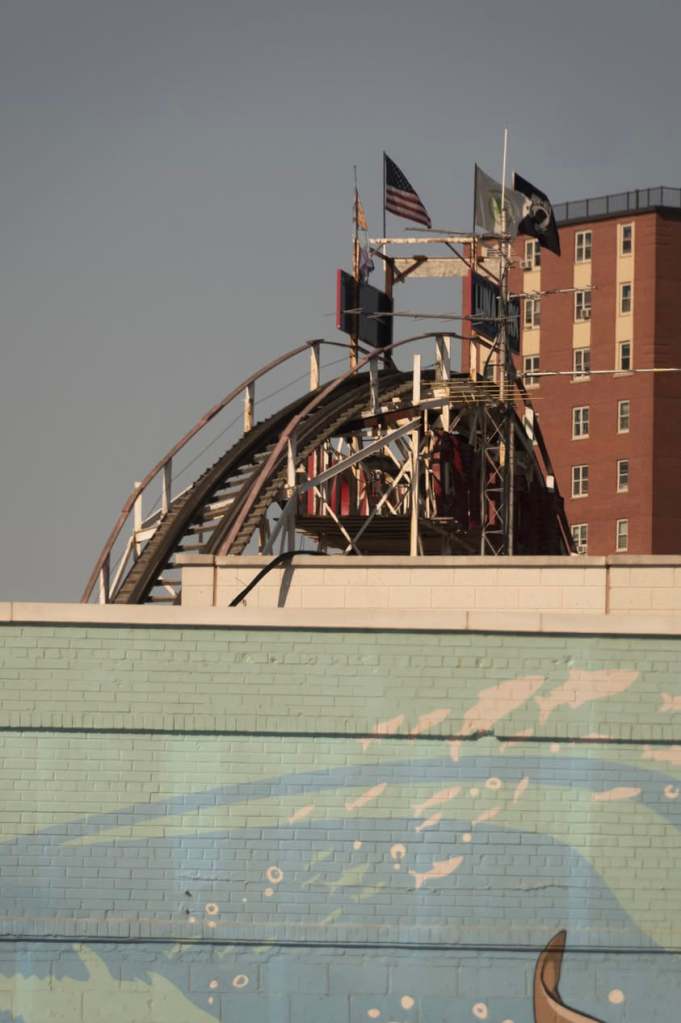
The Drop on the Cyclone, Luna Park, Brooklyn, NY

My blog about Coney Island and the Ferry got many clicks. The AI blog got several comments on LinkedIn. But one person read it. Weird.  I wrote about LinkedIn. People did read it. Did it reach the numbers of Coney Island and the ferry? Not even close. I know from my PR work that certain industry trades carry a lot of weight. Their circulation numbers are not high. But consistent placement in those outlets leads to top-tier media, such as The Wall Street Journal. 

The Ferry Sailing By the Verrazzano–Narrows Bridge

I know my blog posts are not at the level of the top trades and media. But I have a small but growing following. My AI post would have opened up new areas. Maybe we haven’t gotten there with AI yet. Or we are over exposed, and people are taking a break from reading about it. 

The Stadium

The question remains: are people more interested in things that are changing and reshaping our world? Or, would they rather read about the things they grew up with and are closest to?

The Annoying Things PR Pros Get Stuck With

Think Them Through and Realize How Important They Are

By Mitchell Slepian

Every job has its exciting stuff. Every job has its why am I stuck with this? Sometimes, the latter is what grows your metrics and ultimately your organization’s revenue or reputation. I am sure Hall of Famers like Derek Jeter and Mariano Rivera found specific training or other drills annoying. But they did it, and they have five rings to show for it. I wish they had more.

Back to the real world. We all love it when we score a hit on Dow Jones Newswires, a key industry trade, or when your Instagram and LinkedIn posts are hitting record views and have positive comments. Then there is managing the communication team’s email box. We all know that’s the overloaded inbox with requests from reporters, analysts, and event producers who want your CEO and CFO to speak at a leading industry event. We jump on those. Then there are the customer emails complaining. In your mind, you wonder, why didn’t they contact customer care? Maybe they did. Perhaps they never heard back or weren’t pleased with the service.

We get emails from people asking you to buy batteries, hamburger patties, insurance, or to see if they are related to you, and wonder what discounts you can give them. I am sure you’ve received the queries from people whose parents or grandparents worked for or were involved with your organization. Maybe they contributed money for fundraising campaigns or held leadership roles.

When I was in the internet telephony world, people emailed the PR Team’s mailbox every day. Rarely was it a reporter. They knew how to find us. One guy called me and tried to get me to buy his battery backup system. He said that if our network went down, his company would save us, and he was the only one who could. I directed him to our website, which explained our procedures for network outages. They had to be on our site. People purchasing our service needed to know the system worked. He said he never checked our site. I remember saying something along the lines that you probably should research the company you’re asking to spend six figures on before cold calling. He hung up.

I often get emails or calls from people whose now-deceased grandparents made donations to the organizations I volunteer for or work for. They want to know whether the plaques with their names are still hanging or whether the rooms dedicated in their honor are still in use. Often, they tell their children about the nice things their family did. 

Many of us do not consider this public relations. But it is. When you take the time to listen to these people or work with those at your company or volunteer organization to get them the answers they need, it goes a long way.  They are happy and will write positive comments on your social media feeds, buy more of your products, make donations, and come to events. Sometimes the annoying things are what help you grow.