A few days ago, I celebrated my birthday. I am not into them. To me, it’s just another day. But I do try to do fun things on that day. I started at the Intrepid and spent over three hours there. I took tons of photos on the carrier’s flight deck. I wish Maverick were there. Stay tuned for my AI photography post. It’s gonna land soon.
USS Intrepid
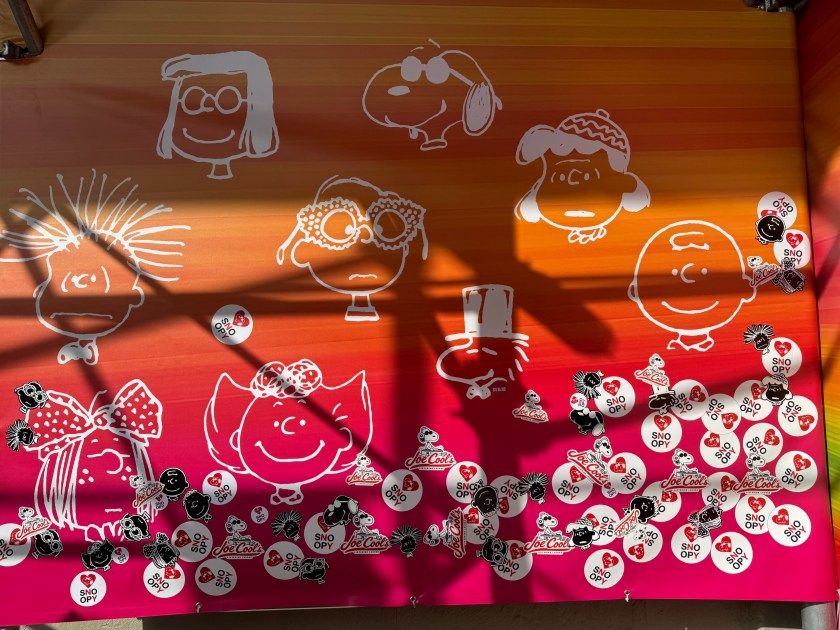
After I left the Intrepid, I headed down to the Meatpacking District to see the “Snoopy in Style” exhibit on Little West 12thStreet. My family loves the Peanuts. They say I resemble Charlie Brown. One day I hope to hit that homer or strike out the batter. I am fine with my shortstop using his supper dish for his glove.The Village’s geography is chaotic and how its streets are cut off from each other, is interesting.
I asked Google for directions for the exhibit. Typical of a traditional Google, or any other search engine for that matter, it directed me to many links. Some useful. Some useless. It told me which train or bus to take. Or what streets to walk. Bear in mind I was about 5 minutes away. I told the search engine my exact location.
Snoopy in Style
I switched to an AI search. I was quite direct. I said I was in front of the Gucci store on West 14th Street. It said I was less than two minutes away and told me exactly what to do. For kicks, I tried it again one block later. This time I said I was in front of Sephora on West 13th Street. AI told me I was about 30 seconds away. All I had to do was make a right on the next block, onto Little West 12th Street, and the Peanuts exhibit would be a few doors down.
It was. The line was around the corner. It was closing in less than an hour. So, I went over to City Winery. I plan to try again to see the exhibit.
AI was so direct. I was always taught to explain something like you are explaining it to your grandmother, who might need more direct instructions, rather than being directed to too many options. I was very pleased that it spoke to me as a person who needs a little help and coached me along.
How many times have you heard, “I am too old for this technology. I remember when we did it like this.” This tech could refer to email, texting, social media, and countless other things, including Word, Excel, PowerPoint, or the Google Suite.
I am involved in many community activities and chair one of them. My responsibilities include creating and distributing our newsletter using Constant Contact, hosting meetings on Zoom, and managing social media across Instagram, Facebook, LinkedIn, X, etc. To do most of this I shoot the images with a mirrorless Nikon Z, I use Adobe’s Bridge, Lightroom, and Photoshop. I write most of the material in Word and keep my spreadsheets in Excel or Google Sheets.
Here are three different tales.
Tale 1
At one point, someone was supposed to type reports for a committee. I sent back my edits in Track Changes in Word. He was very confused. He did send his report typed up in an email. He asked me what Track Changes was. I said it is Word’s editing feature. He said, “What’s Word? Is that something new?”
I said no, it was created when I was in the eighth grade, and the editing feature came out a few years later. Bear in mind this person was 71.
Tale 2
At the same time, I worked on a PowerPoint for a podcast I was coordinating with one of my heroes. He and I created the slides and ran the event in unison. He was 91 at the time.
A week ago, to help me with my newsletter, he sent me an amazing article totally ready to go. All I needed to do was insert it into Constant Contact and pick some images, which I shot and edited.
Tale 3
A week ago, a buddy of mine invited me to a baseball game. He was lucky enough to get field-level seats at the Stadium at no cost. He had to transfer my ticket to me via Ticketmaster.
That was the ride from hell. He tried and tried. Eventually, the ticket landed in my inbox, and I transferred it to my Apple Wallet. He’s only a few years older than me.
AI – The New Wrench
I can go on for several pages with similar stories. But you get the picture. Let’s jump ahead.
Now we have AI. I have been using it to do research and cut back on the menial tasks. I let AI do the work so I can focus on the bigger picture. When I bring this up with some of the people I just spoke about and others, I feel like I am scaring them. I mentioned new apps for them to test. Some have said that we are still learning email.
Yeah, I know someone who still goes to a teller and has never used an ATM. I remember using them in the 80s. I remember lots about that decade – great clothes, music, and leadership.
The Conclusion
Technology will keep offering us ways to make things better and easier. No matter what, there will still be people of all age groups who grasp it and those who do not.
Many of us who work from home, or are home most of the day, spend a lot of time listening to music. We all have our music apps of choice. For the most part, I use Apple Music and YouTube. I have more albums and homemade playlists on Apple than I can count.
Those of you who have read my posts know I favor ’80s new wave and goth tunes, with classic rock and a few other things mixed in. The mixed-in includes some disco. Yeah, I remember the Disco Sucks pins in the 70s. A lot of it does suck. But not all. Classical, opera, and theater music are also in heavy rotation. Country has never been, and never will be, mixed in.
Other than when I go to sleep, all my music is from the digital platforms. Bedtime is from my CD player. Yeah, they still exist and sound fine. I often let Apple Music or YouTube make a mix. It almost always has mixes I can click on as soon as I log in.
AI creates the setlist. It knows what bands I listen to most often, as well as the songs from those bands. It is not unusual for the lists to be heavy on Bauhaus, Bowie, the Beatles, the
Cure, Erasure, Echo & the Bunnymen, Elton John, Depeche Mode, Love & Rockets, the Ramones, Siouxsie and the Banshees, and a few other bands. You get the picture. I am sure you can pick the rest. Feel free to enter your comments in the chat section.
For the most part, my AI music lists are spot on. But I trip it up. It’s not hard. I often add stuff like ABBA, the Bee Gees, Jackson Browne, “La Bohème,” the Village People, and “Tosca.” Feel free to guess some of the others. You’d be right if you picked Prince, Led Zep, and the Who. All are heavily in the rotation.
Apple often says, “Mitchell’s Mix.” It adds a hyphen and says light, rocking, chill, etc. For the most part, it does a decent job. I guess it is learning my tastes. Occasionally it adds the Grateful Dead. When that happens, I immediately exit the list. I have never listened to them and never will.
AI is doing a great job with my playlists. However, like all of us, it is still learning. I think it’ll get there. But who knows what I will pop in to confuse it?
Job searches suck. We know that. You spend hours writing and rewriting your CV and cover letters. Scammers call you with the job of your dreams and try to ask you to pay them to update your resume. Some people fall for this. However, they never get an updated resume; they find unauthorized charges on their credit cards. It is not fun.
Where does AI get into the picture? Job boards use AI to tweak your resume or cover letter. For the most part, it is legit. In some cases, it’s free. I write my cover letters, resumes, and portfolios myself. AI is a great tool for brainstorming. Sort of like working with a job counselor.
AI is here. It is becoming useful in many areas. In the job search, it helps with research. Using a variety of tools that you can easily find on Google, you can do some great sleuthing on the company you are applying to and the specific role.
You can find out the organization’s strengths and weaknesses. You can dig into its share price, when it made job cuts, how it interacts with its local community, and how it responds during a crisis. You can see how it reacts when its competitors pull ahead or fall behind.
This data is essential for creating tailored cover letters and interview talking points. It can also help you find key people to reach out to. Yes, LinkedIn is useful. AI is often more direct. It does say it pulls from LinkedIn. But it also pulls from many other places and can help you brainstorm while you fill out your application.
Is it taking away our jobs? Or can it help you find one? It can definitely point you in the right direction and help you navigate the long road ahead. But you still need to do your own work.
Everyone asks What AI tools do you use? Does it help or harm your workflow? What do you need to consider when using it? Using AI can assist in many roles. The most important thing to remember is trust but verify. It is not 100 percent perfect. But it is getting there. For the record, nothing is 100 percent perfect.
I have been using AI for a variety of functions. One of the key things we need are solid media and influencer lists. Yes, there are the media relations platforms: Cision, Meltwater, and Muck Rack. I have used two of the three and tested the other. All have their merits and demerits. In many instances, what’s wrong with them isn’t entirely their fault.
Thanks for reading Mitchell’s Substack! Subscribe for free to receive new posts and support my work.
Thanks to the consolidation of the news market, the media landscape is changing. Reporters who used to cover telecom may still cover it. But add healthcare or earnings to their beats. Some of the top reporters who you worked with at Bloomberg News, Dow Jones, and The Wall Street Journal are now freelancing for them and writing for other outlets or doing work on the client side. Their @wsj.com email address is dead. Most are using Gmail. Keeping track of who is covering what, their news submission preferences, and deadlines is harder to track. The media platforms try. However, it is difficult. Also, some databases aren’t broad enough. While they offer international databases, they generally stick to major foreign cities and aren’t wide enough for some projects.
That’s where AI comes in. It is excellent for typing in the subject matter you want covered and asking who covers it nationally and in key geographic regions. More often than not, it can give you a fairly detailed list of reporters, their deadlines, and contact information. For me, this has worked better than the list-building exercises in the media databases mentioned.
I know some people who use AI to write their marketing materials. Should you? That’s your choice. I write all of the material on my Substack and WordPress platforms. If you used AI detection scanners, they’d say 0. Do I use AI to help me? Yes. I usually write everything and use various AI tools in Google and elsewhere to check readability and get ideas to shorten or further explain. It can also help you tailor it towards a specific audience.
Is this using AI to write your piece? Not at all. In the old days, you had fun, interesting brainstorming sessions, and people got together in conference rooms and mapped things out. These days we do it on Zoom or maybe via email or chat. It works. Sometimes it doesn’t. But for the most part, we are more independent and too swamped to do the classic sessions. I miss those. AI has been a great friend for brainstorming. It pulls data from a variety of sources and will tell you which audience it is appropriate for.
Is it taking the job away? Not at all. It is a valuable tool. Should you swear by it and drop your traditional reviews and edits? Nope. Use it like you use everything else.
A few days ago, as chairman of the Ten Mile River Scout Museum, I made a few presentations at our annual Alumni Weekend. One was to present a tile in honor of a deceased Scouter who made an impact on hundreds of youths. The other was the introduction of my board of trustees. Both were recorded on someone’s iPhone.
We uploaded the videos to YouTube and transcripts were created. In the first video, “August 8, 2026: TMR Wall of Fame Induction of John D’Arcy,” the only speaker was me. In the second, “August 8, 2026: Presentation of Museum Trustees*,” each of my trustees introduced themselves. We do a lot of work and have fun. We don’t take ourselves too seriously. Most of us have been friends for decades and love to joke around.
I was told by the person who recorded the videos that he placed them on YouTube. I was excited and took a look. YouTube automatically created transcripts. I was aghast when I saw the transcripts. Yes, it got some things right. But it misspelled many things. Before alerting me that it was live, it should have been checked. But it is not the end of the world.
I don’t think YouTube’s AI understands Brooklyn. Everyone in the video is originally from NYC. Many are from Brooklyn. However, as far as the other boroughs, YouTube doesn’t speak that either.
Several of our camps have Native American names. One of our now-shuttered camps was Nianque. One of our trustees said he started over sixty years ago in that camp. The transcript said, “Camp Miami.” We’ve all been there. Miami and a Scout camp in the middle of Narrowsburg are way different. Personally, I like my camp better. But have had many adventures in Miami. It spelled many first and last names wrong, as well as the titles.
We toyed around with editing the transcript. But it was time-consuming and, for some reason, more difficult on Macs v. Windows-based computers. Why? Who knows? You’d think it’d be easier and quicker on a Mac. Everything is. What did we do? We deleted them and uploaded again without transcripts.
Am I upset? Not at all. As a matter of fact, I am pleased. This was a great learning exercise. It is fantastic that AI is being put to work to create transcripts. They look nice and are perfectly placed at the bottom of the video. This taught us that you always need to check and verify. I do not doubt that as we move forward, this will get better. My other work with AI tools has proven that. We are on a learning curve, and we are learning, learning a lot.
Is it Helpful or Does it Destroy Creativity? Will it Make Coney Island or NYC’s Flowers and Rivers Look Better?
Wonder Wheel
I’ve been to some in-person breakfasts and/or lunches (remember those) and attended several Zooms (we all know those) where we’ve discussed the progression of AI. Make no mistake, it is progressing.
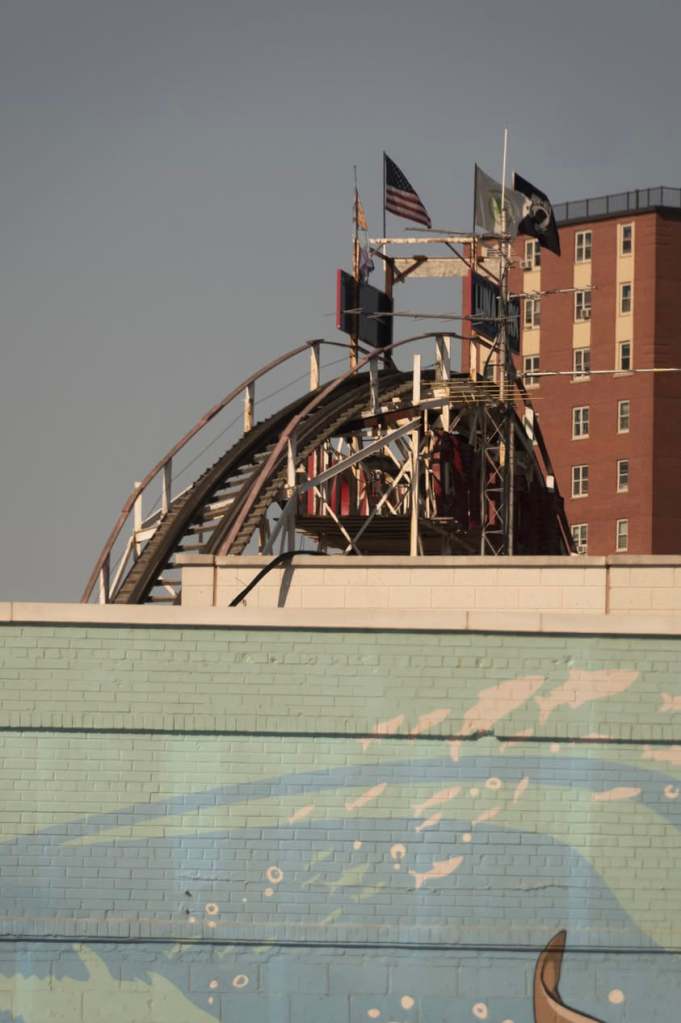
The Cyclone
One of the things we discussed in the side conversations or hallway chats is how it affects the arts. I had a similar discussion with people who are writing and performing their own music. They’ve played in some of NYC’s bars. Hopefully, one day, one will headline Madison Square Garden.
Lake at the Brooklyn Botanic Garden
The big topic is: does AI help or hurt the Arts? I know people who are now creating art using AI. Is that how we should use it? Use it as a collaborative tool. It will make your work better.
Flower at the Brooklyn Botanic Garden
We have spoken about how, in a few decades, we will enter the Guggenheim and see art created by AI? Will it rival the pieces painted by Cezzanne, Monet, Picasso, Pissarro, and Van Gogh? Unlikely. I doubt it can capture the feelings they had while painting. But it can create interesting material? Should it have an asterisk? Sort of like what they did to Roger Maris after he hit #61?
AI certainly helps you be more creative. Don’t use it to create your image or music. Use it where it enhances your work. I love using Photoshop’s new AI tools. Most of my photography is shot outdoors. My favorite sites to shoot are Coney Island, Brooklyn Botanic Garden, South Street Seaport, and a few scout camps.
Little Acorn Cabin at William H. Pouch Scout Camp
Photoshop has enhanced its tools that let me delete those annoying glares and spots from the sun. Yes, I used polarizing filters. But nothing can one hundred percent eliminate them when shooting. We have great tools on our cameras, and AI is another super tool to help. It does a few other cool things, such as removing distracting elements or fixing the colors better than it previously did. It is easier to fix someone’s shaving cut and make their face look better in the image with their children at special moments.
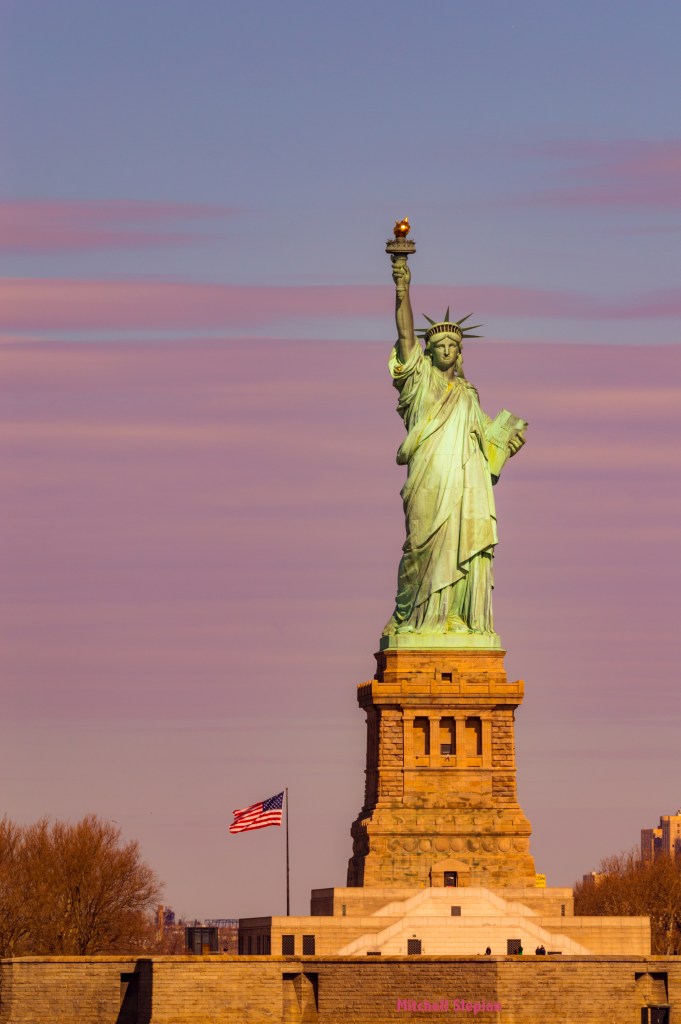
Statue of Liberty
Sure, it can play around with clothing. I know someone who wanted to take a uniform someone wore in an image from the 30s and update it to today’s look. I said no; that’s where we should keep things the way they were.
Brooklyn and Manhattan Bridges
Bottom line: when used properly, AI can do wonders. It is frustrating to see sun spots in my skies, rivers, and fields when filters could not block them all out. That is where AI is especially helpful. It can help you be more creative. Use those ideas as a starting point, not as a substitute for your own vision.
Time to move on and discuss my latest findings. I have been on several Zooms, a breakfast (the bagels and lox were good, but not from Brooklyn), and conference calls about it. AI helps with streamlining basic activities. In the media relations world, it is great to research reporters and publications. I have found it more helpful than the pricey databases (Cision and Meltwater) we all use. Yes, those platforms are incorporating AI into their system. Like all things moving forward with AI, it is getting there. Remember, once there were three TV stations – ABC, CBS, and NBC. Look at where we are now.
Many people are using AI to draft emails and corporate memos and to create visual aids. Does it take the human touch out of things? Sure. It is cookie-cutter style. When I upload these blogs to AI tools to see what it thinks, it makes important corrections by catching typos and offer suggestions.
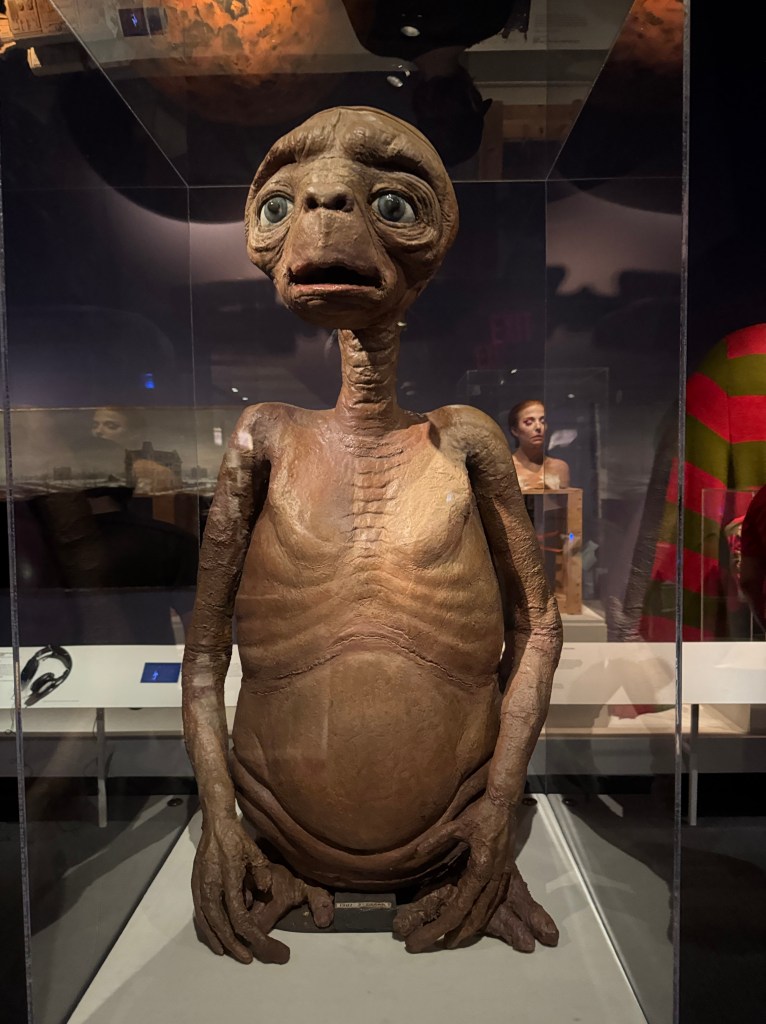
That’s great. But it takes the personalization out. I mentioned characters from “E.T. – The Extra Terrestrial” in “Keys” on Substack. I mentioned Keys, played by Peter Coyote, and went to stay with Gertie, played by Drew Barrymore, who is a better character. In my opinion its true. Most people probably remember her telling E.T. to be good in her tearful goodbye.
E.T. at the Museum of Moving Image, Astoria, NY
I was personalizing my post. AI told me not to. It seemed to think personalization would be distracting or not flow. Did I cut it out? No. I cleaned up my reference, and all of a sudden, AI loved it. Go figure.
The holy medicinal waters at Coney Island
The questions raised are: how creative can AI get? I took a few continuing education writer classes with the Gotham Writers Workshop. Highly recommended. We discussed this. Our thoughts came back to the standard thinking with AI as it grows – Use It and Verify. Don’t completely trust it. But learn how it will help you move forward. It can help your creativity. Just like seeing certain waves at Coney Island when you are shooting images of the Polar Bears.
Coney Island Polar Bear Plunge
Sounds like the rule of thumb for everything. It is all a learning experience that helps us get smarter.
I read on a social media platform to do a deep AI search of yourself. You should see what people find about you when they search for you. It’s a good idea.
These days, organizations do that as a pre-employment check, potential dating partners check you out and organizations do it to see if you’re okay to volunteer with them. This is only the top of the list.
Maybe you read my May 15 post, “Is AI Really That Smart?” I discuss its accuracy and your need to verify. AI is a great tool, and it is forging ahead. We are in the midst of a revolution. We are also at a learning stage.
The other day, I took the advice from my reading and did an AI search on myself. I used Google. I have found that it and X’s Grok offer the easiest and quickest searches. Was what I found about me accurate? Yes and no. Was it concerning? Not really. Was it funny? A little. Was it slightly misleading? Yes.
Let’s jump into it. It quickly found my employment records. All it did was search LinkedIn. It was fairly accurate. It didn’t pull up the timing I had for certain roles. But it was not terribly off. My LinkedIn profile is accurate as the platform allows. That’s the simple stuff.
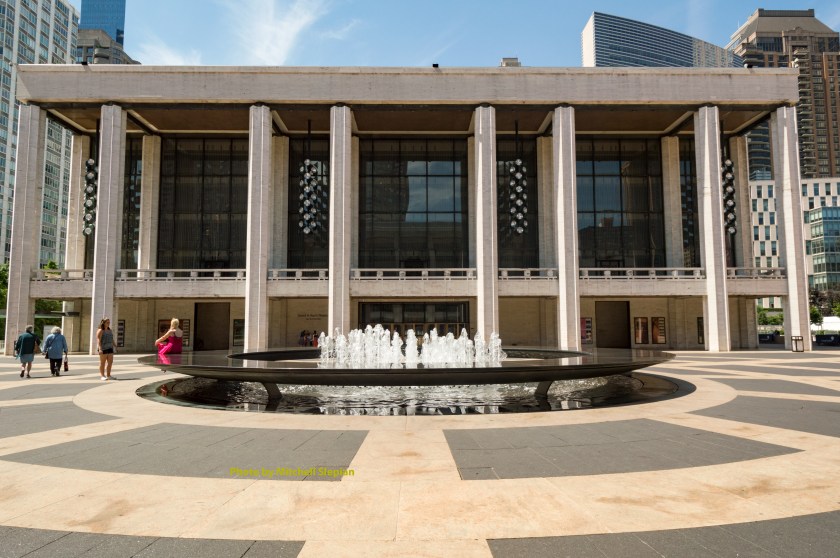
I asked it about my interests. It quickly pulled up my loves: the Yankees, summer camp, and theater, particularly at Lincoln Center. I am in love with the fountain. I’d love to jump into it. That’d be way cooler than jumping into the one at Washington Square Park. I have been in that one when there was no water in it. I’d have no problem jumping it when the water was in it. People do it every day. Lincoln Center’s fountain is too classy. Maybe they can do a fundraiser and let people pay to jump in. I’d donate and jump.
Fountain at Lincoln Center
I asked it some questions. It said I was an avid Knicks fan, and I do not follow the NFL. I only follow MLB. I am not a Knicks fan. Sure, I am rooting for them in the championship. I have never watched a basketball game in my life. I was once offered tickets in the area Spike Lee sits. I turned them down because I was attending a more exciting (at least in my mind) event at the Plaza Hotel. Google told me to I check the scores of their games. During the final game of the playoff round, I checked once while I was watching the Bronx Bombers. As a New Yorker, I felt the need to know. I was glad they won. Does this constitute me being a hardcore fan? No way.
Yankee Stadium
I asked it about my family. It noted that my father passed away. It mentioned my mom was an RN. It said, “I am very close to my sister, and we travel regularly to Long Island for photo shoots.” I do a lot of photo shoots. My photography is mostly shot at Coney Island, Scout camps, my European vacations, and the East and Hudson Rivers. My first one on Long Island will be next week at Baiting Hollow Scout Camp. My sister will not be there. She has never been to any of my photo shoots. Oh, the ones I allegedly do on the Island are shots of the stars. I tried that once in Forest Hills. One day, I will try again. It also said someone who is not my sister is.
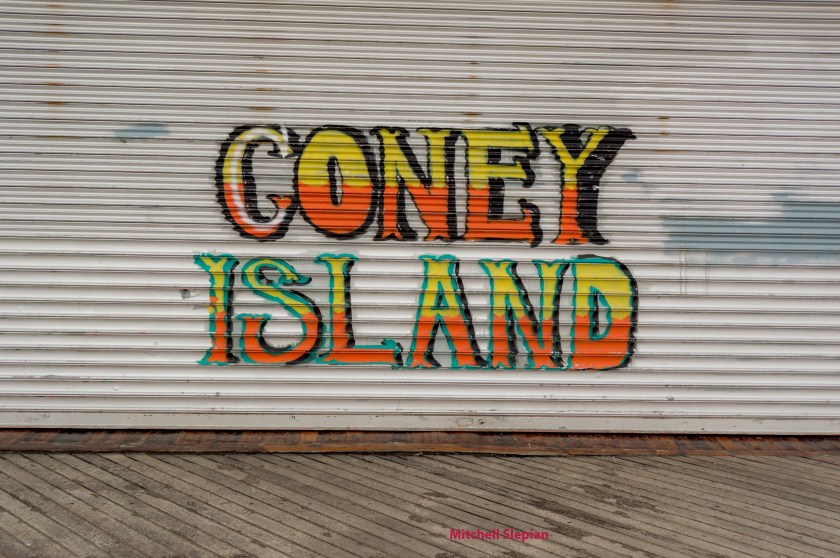
Coney Island
I asked it what music I like. It said the top of my lists are Sir Elton, Billy Joel, and it claimed I don’t like the Beatles. I love the Fab Four. It expanded to list my new-wave and punk loves – The Clash, The Cure, Depeche Mode, Echo and the Bunnymen, and others. It left out my favorite band, U2. Was it right or wrong about music? I am not sure. Google pulled stuff from my blogs. In some of them, I mentioned what I listen to while I am writing or editing photography. All of these bands are in there. For the record, I am listening to goth right now. So, I guess AI was making educated guesses.
Rock Lake in Kunatah, Ten Mile River Scout Camps
It noted “Rent” is my favorite show. Hands down, it is. It pulled up my volunteer work and my role as chairman of the Ten Mile River Scout Museum. It mentioned my other volunteer work and attendance at religious services. It might have made me too religious. It is what it is.
It chronicled my Scouting America history. It noted that I was the chief of the former Aquehongian Lodge #112 and that I am an Eagle Scout. It got a few other things right and some things wrong. Funny thing is, I searched on the same terms two days in a row. One day it said this. The next day, it said that. It also pulled my fiction blogs and looped what my characters are doing as me. Most of the characters are based on me. That has never been mentioned. So maybe AI figured that out.
Brooklyn Bridge
Bottom line, AI is getting there. Is it 100 percent accurate? Will it ever be? Probably not. But will it be really close? No doubt about it. Should you use it as your final check to judge a future hire or date? No. Should you still verify and check other sources? Absolutely.
We all know we are swamped by too much copy. Whether it be news, fiction, non-fiction, or social media posts. We can agree that social media falls between fiction and non-fiction. We all know people who swear by it and believe everything that’s posted.
Some of you know, for many years, I have been working on a graphic novel. It is taking too long. I need an illustrator. For those of you following, Marc, Alana, Anat, and the rest of the bunch, I thank you. There will be more soon enough.
The questions on my mind are: What are people interested in reading, and how can I get them to read it? As a PR professional, I was taught that when pitching a journalist, I need to explain why a story is newsworthy and why readers will care. I remember creating the American Institute of CPA’s (AICPA) Economic Outlook Survey Index. The AICPA had an economic outlook survey. No one cared about it. Duke University and CFO Magazine partnered on one. Several other universities had a survey I wanted ours to reach new heights. At the time, we did it with North Carolina State University. I spoke to trusted reporters at Bloomberg, Dow Jones Newswires, and a few other media outlets. The journalists told me to create one index. I got approval and did it. I offered embargoed data to Bloomberg, Dow Jones, and The New York Times. All of them ran it. That was in 2011. The survey continues to run and gets top-tier media coverage. I have long left the AICPA. But now I was able to create something that people wanted to read.
My blog about Coney Island and the Ferry got many clicks. The AI blog got several comments on LinkedIn. But one person read it. Weird. I wrote about LinkedIn. People did read it. Did it reach the numbers of Coney Island and the ferry? Not even close. I know from my PR work that certain industry trades carry a lot of weight. Their circulation numbers are not high. But consistent placement in those outlets leads to top-tier media, such as The Wall Street Journal.
The Ferry Sailing By the Verrazzano–Narrows Bridge
I know my blog posts are not at the level of the top trades and media. But I have a small but growing following. My AI post would have opened up new areas. Maybe we haven’t gotten there with AI yet. Or we are over exposed, and people are taking a break from reading about it.
The Stadium
The question remains: are people more interested in things that are changing and reshaping our world? Or, would they rather read about the things they grew up with and are closest to?