Jerry and Gili were playing quietly. Gili was getting bigger. Jerry watched over her. She was strong. She still loved her milk. Sarah and David Benjamin were eating their baby food. Anat was briefed on their superpowers. She was ready. She expected her day with the twins and her kids to be relaxed.
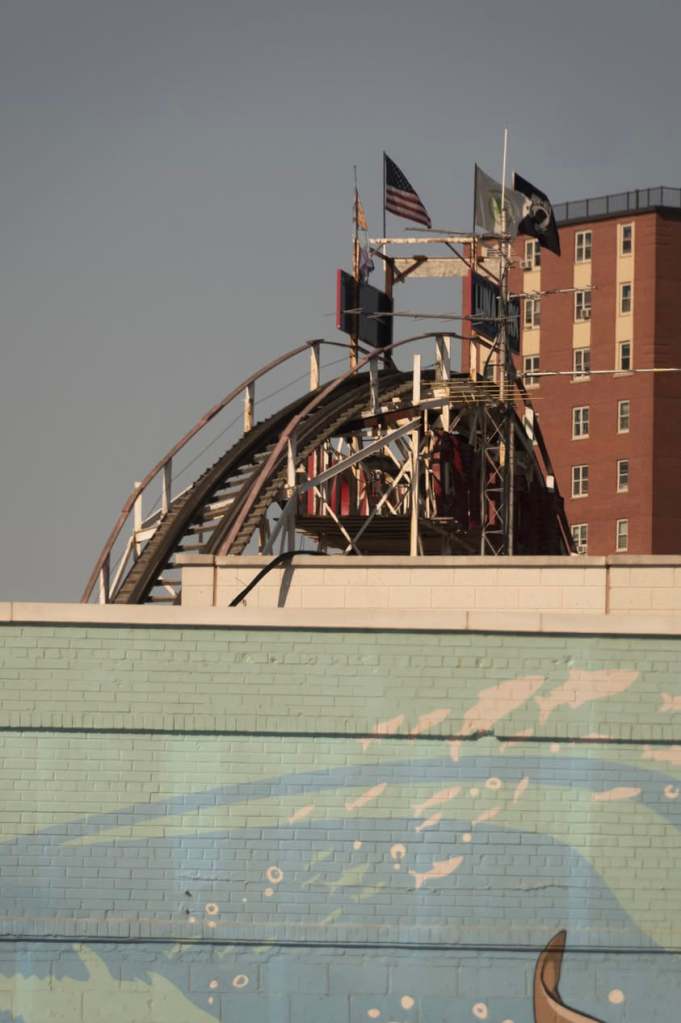
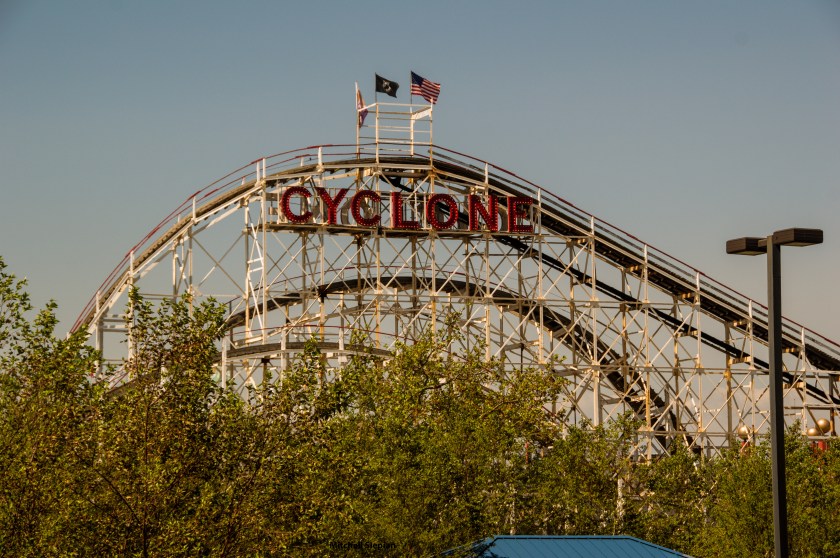
The Drop on the Cyclone, Luna Park, Brooklyn, NY
She played Bauhaus the Cure in the background. She understood the kids would listen to whatever they wanted when they got older and developed an appreciation for music. But she wanted to push them towards goth. Who wouldn’t?
Anat was working on her taxes. In a switch from his usual beat of Staten Island’s south shore, Dan was out in the frigid weather patrolling Coney Island undercover. His expertise was required. Nothing unusual was happening. The Coney Island Polar Bears were in the water. People were eating hot dogs in Nathan’s, and parents took their bundled-up kids to the NY Aquarium. It seemed like a normal winter day at the beach. He texted Anat he’d be home in about two or three hours and asked if she wanted him to pick up pizza from L&B Spumoni Gardens. Of course, she said yes. Saying no would be criminal.
The polars bears were exiting the water. Near the Cyclone, some kids were goofing off. But nothing Dan had to address. As he walked back to his car, he noticed a tall girl, about 18 or 19, wearing a stained blue sweatshirt with the name “Christy A.” running down both sleeves. She was taunting some of the other kids. Dan figured it was just a group of kids goofing off. He didn’t see it as a threat. Until he saw moldy, stale bread flying at some of the kids. One piece clocked a girl in the head. She fell. He raced over to her to see if she needed help. Bread with larvae was flying everywhere. He saw Christy A. shooting it out of her mouth and hands. He yelled at her to stop. She started to jump up and down. Pieces of bread almost nailed him in the throat. Christy’s hair was fire red, as was her face. He pulled out his weapon and fired three shots. All were knocked down by bread.
Christy raced toward the subway station. Dan chased her. She nailed him in the eyes. He temporarily lost his vision. She hopped on the F line. She did tap her OMNY card. At least she didn’t jump the fare.
Dan immediately texted Anat. You’d think he would have texted the Coney Island Precinct that is in the subway station at Stillwell Avenue. He knew this was something that Anat and her “family” would handle better.
I remember back in the day, when you couldn’t check your email on your phone or by logging in on another computer. You had to check it on the computer you normally used. Years ago, my sister and I shared an email address. I figured out how to check it from other computers. I would log on and email her. She got a little nervous and scared. She had no idea how I was doing this. Of course, I explained everything. But I had fun for a day or two.
I remember when I was at a PR firm and on a Friday, booked the CEO (Scott D. Cook) of the company I was representing (Intuit) onto CNBC. He was supposed to be on the following Monday. I was in NYC, and Cook was in Mountain View, Calif. The producers were working out the final details. They, a coworker, and I left each other voicemails all weekend. We were checking nonstop. Monday came around, and we worked everything out with Cook’s executive assistant and he did a great interview.
These days, all we would have to do is send a few emails or texts, and everything would be set. In some jobs, you need to constantly check your email. But the question I would like to raise is: how much checking is too much? Do you check immediately before going to bed and as soon as you wake up? Does it kill when you need to turn your phone off during Broadway shows, the New York Philharmonic, and operas? When is checking excessive? Can you sit through dinner with family and friends without logging on?
The best part is that most of the time, all your emails come from your project management applications, such as Basecamp or monday.com, letting you know the web update is live or that edits have been made to a document. Oh, and there are sales pitches for things your company will never need. Or people reaching out to you to forward their resumes to HR. These people are not people you know. They are just spamming everyone they can secure an email address for.
For the record, before I sat down to write this, I was at the gym. My workday was over. I was doing some core work and checked my email. On the super-long train ride into work that morning (due to a stalled train at a major station), I held back from checking and kept reading “Remain in Light” by Chris Frantz. I tried my best to stick with the book on my Kindle and not try to live that wildlife by checking my office’s email. I even skipped checking my personal email accounts. I have too many of those.
Bottom line, I think it’s fine to check it in moderation. But I always remember that the email you’re waiting for, or think is coming will probably come in due time.
I have been volunteering since I was very young. Work includes community groups, political campaigns, religious institutions, and my building’s board. I am still involved with a few groups. I chair one.
Volunteers are the lifeblood of organizations. Volunteers come in all shapes and forms. Some have limited time. Some have lots of it. Sometimes some have too much time. But we make sure we use all these people.
I remember working on political campaigns, and the so-called experts come in, volunteer, and tell you how they are running for political office and plan to start with the U.S. Senate. Sure, things like that can happen. But realistically, it does not. Volunteer coordinators sit and listen to all of this. We do our best to build a rapport with all our helpers. Some give money besides their time. Some are only in play because of how much money they can give.
No matter what, all these people are important. They have something to give. These folks all want to give back. The most important thing is to recognize that and make sure you have work to do. I remember days in volunteer offices when people would come in after we just wrapped up sorting out a big mailing. We had everything ready to go to the post office. We were almost done for the day. But people came when they had time. So, we found work for them to do. Sometimes it was as simple as asking them to check the mailing project we sorted or double-check the alphabetizing of lists.
The people were giving back, and we saw the smiles on their faces. They felt they were contributing. Several people thanked me when they left for giving them the time to help the organization. It feels great to see people wanting to contribute and enjoying themselves. Some of the groups I used to help regularly aren’t as interested in having people work for them anymore. It is a turnoff.
Bottom line, never turn away a volunteer and always make sure you have something for them to do.
No, I am not talking about Aretha Franklin’s tune. Years ago, I worked for someone who, when it came to politeness and respect for others, had it down to a science. I remember in elevators, he would always wait for everyone to exit, especially the women. He held the doors for everyone and helped people with their coats and into their chairs.
I haven’t heard from him in a few years. But I doubt things have changed. His dad, who is long gone, was similar. There was a great scout leader who passed away a few years ago; he was an example of respect, particularly toward our campgrounds. We’d walk around the camps, and whenever he saw garbage, he’d pick it up off the trails. He’d be upset it was there. He taught us to keep our sites clean, and when we saw trash, we cleaned it up and disposed of it properly.
I try to follow their steps. But I have found that in today’s world, simple respect is gone. A few weeks ago, I was entering the gym. It was pouring outside. I saw a person dragging their heavy gym bag at the door and trying to exit. I held the door for her. She stood there for the next several minutes texting away. This has happened a few times—the same thing in elevators and at the doors of our office buildings.
Cell phone addiction has cramped respect. People are too interested in seeing their friends’ latest memes or social media posts. But I think it was happening slightly before people’s best friends became their iPhones. The trails of the places I hike are getting dirtier, and less people are wiping down machines in the gym after they finish using them. The list goes on.
More respect equals better productivity. People will likely be more motivated and happier.
About a month ago, I came back from a tour of Sicily. I was there for about two weeks. I did start my tour solo, as I arrived a few days before the tour officially kicked off. I saw a lot before I met my new “family.”
I went to the conference room in my Palermo hotel, and we walked over to a nice restaurant. I sat with some people that I wound up eating with several more times. I was solo. There was one other solo traveler. I was the tour photographer. I wasn’t hired for it. It’s just that I was one of only two out of 45 people shooting with a traditional camera v. a mobile device. I was using a Nikon Mirrorless 7.
Ruins
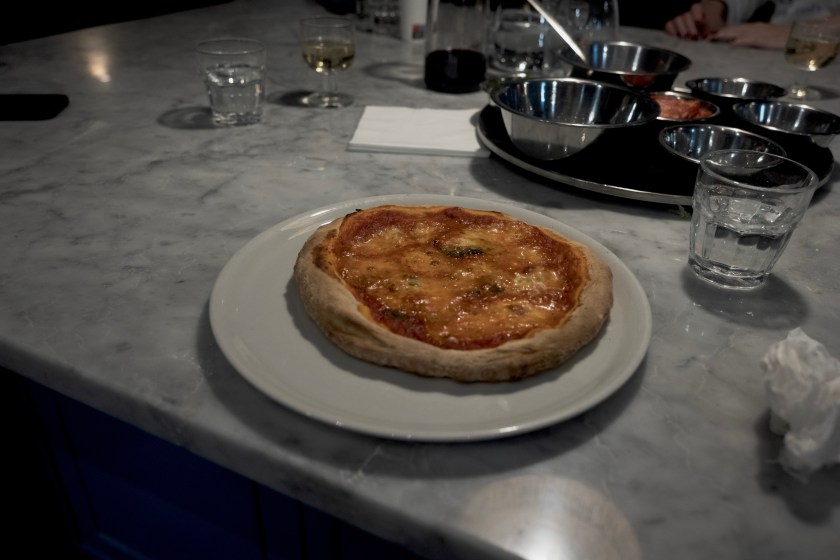
Sicily is beautiful, I became friends with nearly everyone. Of course, the people originally from Brooklyn and the Bronx were the best. Most people recognized I was from Brooklyn as soon as I started talking. That makes me proud. No other place has the Cyclone, the original Nathan’s, the Brooklyn Museum, and fantastic pizza. Sicily’s pizza is better. Way better. For the record, so is Milan’s.
Pizza made by me
Everyone on the tour was excellent. Yeah, we had some people that I thought were children of the corn. But we all got along and had a great time. We had a WhatsApp group during the tour run by our guide. She was the only one allowed to post.
Most people wanted to see each other’s photos. Someone made a WhatsApp group for us to use once we got home and went through our shots. It took me a few days to edit with Photoshop. But I posted as I edited. For the next few weeks, we swapped our photos and memories. We all commented. I am happy to say people loved my images. We are in a new year and still chatting.
I look forward to my next tour. I hope I can make a new family.
Email has been mainstream in business since the 1990s. As we know, we now have too many other ways to communicate, including but not limited to social media and texting. Remember faxing? Or snail mail? Both are still in play.
As a chair of a community organization and a volunteer in a few others, we generally communicate our business via email. Several of us who are friends often have our own discussions via chat. But all official business is done via email.
We have members who do not have email. They do not have computers. Some are senior citizens. But before we toss in the age factor, I have worked with people in their early 90s to create PowerPoints and run podcasts. They had no issues. Yes, I worked with people much younger who had no clue how to use email or other communication methods. So, age is just a number.
About two weeks ago, it snowed in New York City. It hampered some events. One started at 7:30 a.m. ET. The other was supposed to begin at 9 a.m. ET. We wound up combining our groups. This recent storm was not the first time we have had to take that course of action. It will not be the last. We early birds sat around, and the folks from the later-starting group wandered in. Both groups have their latecomers. Snow delayed some of them even further. A day or two later, I suggested that when we know the weather will not be good, we send an email and make a robocall to let people know we are combining. Several people blasted this idea, saying some people don’t have email, and others don’t want to be bothered by a robocall. I made the case that email has been in play for a long time and that the call was coming from a number we all know. It should not register as a potential spam call, as carriers like to say.
I know people who text to landlines. I still have one. The texts usually arrive in gibberish. As chair of my group, generally start meetings (which are traditionally on Zoom, that’s another issue), reminding people you need to text their cell phones. Some folks love Facebook Messenger. Unfortunately, they do not realize Messenger works on Facebook. Many don’t know that you cannot email Gmail or send SMS messages from Messenger. Don’t get me started on WhatsApp. I think it works great and has its place.
Before I was chair, I was corresponding secretary. I created a form for people to send me via email when they donate. I can take their contact information off it and generate thank-you notes to distribute via email and traditional mail. It is still lovely to receive a personal, warm thank-you note in the mail. One of my chairs used to mail me handwritten notes with donor information. Sometimes he would wait weeks, and I’d get an envelope with 30 or 40 scraps of paper with contact information. This issue severely hampered our program.
The question has always lingered in my mind: What to do? I continue to use email and will call people. But the question will always linger on how to reach everyone.
Guidance can help all of us. It opens our minds. Recently, I spent some time in Sicily. Book your flight. It will be a rewarding experience on all levels – culture, dining, fashion, history, sites, and more. Much more.
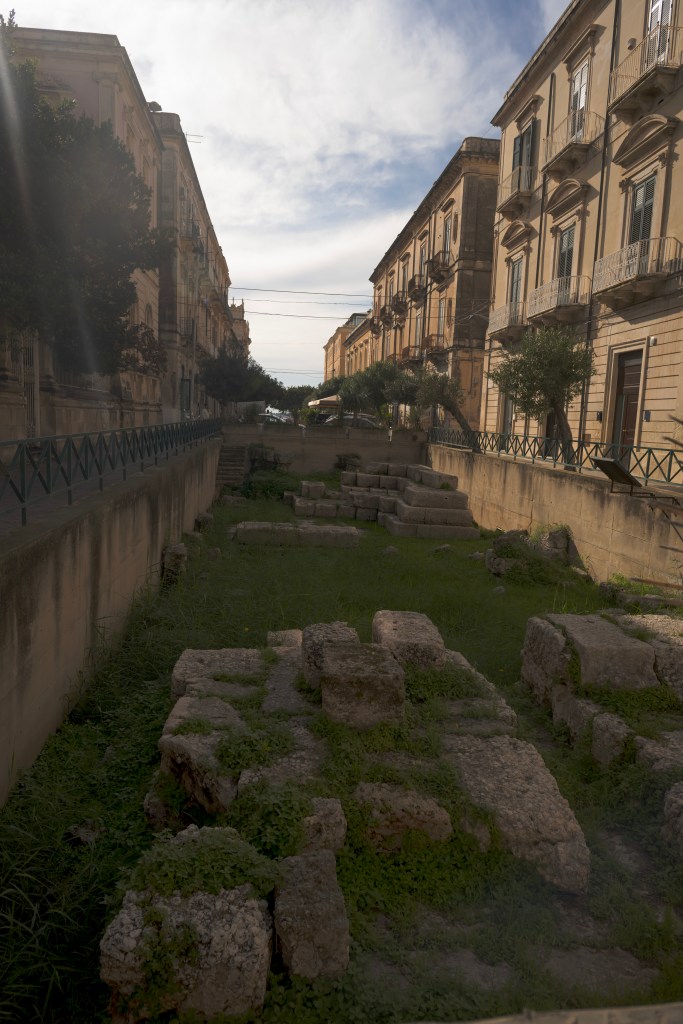
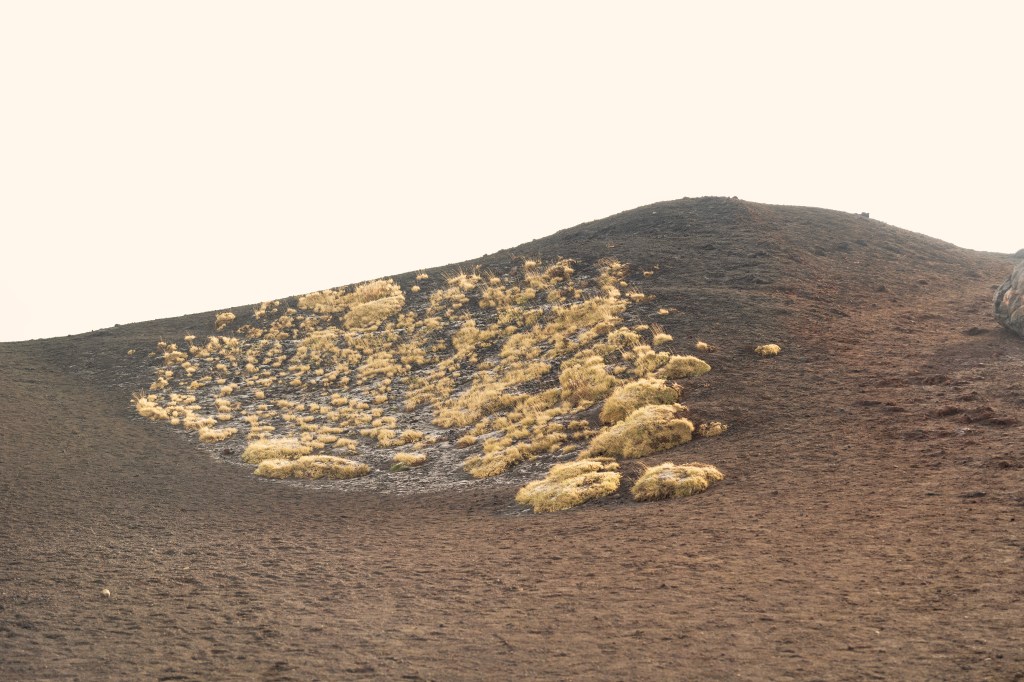
On the tour, we had several local guides. One stayed with us for about three days. She gave us a hands-on tour of Mt. Etna, the archeology museum, ruins and the Roman theater. She was a fountain full of knowledge. We first met her at the archeology museum. Keep in mind, I am a member of nearly every museum in NYC and the Smithsonian (which has a few venues in NYC).
Ruins
As we got off the bus and walked out of the museum, I thought, why can’t I do this myself? I do this once a week at home. One thing I did take into consideration was that, at this venue, none of the exhibit descriptors are written in English.
As soon as we walked into the museum, I started learning from my guide. Our guide taught us so many things. We were looking at the Sicilian people’s contributions to water and wine jugs, their creation of safety pins, and cooking equipment. She explained what was going on during the timeframe leading up to the creation of these items.
Listening to her, I realized I must look at museum displays a little differently. She gave a shout-out to the Sicilian art at the Metropolitan Museum of Art. She spent some time there a few years ago. I was there a few days ago and asked where the exhibits were. I found them. I learned so much more about Southern Italy’s culture than I ever would have on my own. I am now on the path to learn and appreciating it more. So, never underestimate the power of a good tour guide. They can open ancient worlds and teach you how some of what happened affects what’s going on in today’s world.
Jay was still shooting glass at the infants. Marc and Alana were providing cover and taking the hits. It didn’t hurt. Thankfully, most people were stuffing themselves with bagels and lox. No one noticed the kids were under attack. Everyone was too busy eating.
Marc and Alana looked at each other. They knew one of them had to socialize with their family and friends. They both should be doing that. They should be sitting proudly with their beautiful children. Of course, that wasn’t the case. Dispatched to the crowd after losing rock, paper, scissors, Marc began chatting with his and Alana’s parents. They wished the two would wed. But they knew that’d never occur.
Alana turned around for a second to scout out the room. She was ready to unleash wine. As she turned back around, she saw the kids smiling and watched their eyes blink like crazy. She heard them breathing a little heavier. Suddenly, Sarah rolled over and turned into a serpent. She slithers over to Jay and is about to unleash her venom. David Benjamin turned into a whale. The twins in their new forms looked at each other. They then stared Jay down. He flung glass at them. Sarah whipped it back at him, while David Benjamin opened his mouth, displaying his sharp teeth. Jay tried to retreat. Tried he did. David Benjamin whipped his small but powerful tail around and smacked him in the head. At the same time, Sarah released venom into Jay’s leg. Jay hobbled out of the shul. Alana stood in awe of her kids. She needed to show Marc the video she just shot on her iPhone. But first, she had to wait for the kids to turn back into cute little infants.
Does Old School Still Work and Do We Want It to Continue?
We have apps and online platforms for everything. I love them. They are helpful and make many things easier. Is that always the case? Absolutely not. Time and time again, these extraordinary technical advances slow me down.
A few weeks ago, I tried to order deli sandwiches for delivery to my grandmother’s house for our traditional Chanukah celebration. The app wouldn’t let me pre-order more than a day in advance. It wouldn’t let me pick a delivery window. Funny thing is a week before it let me do exactly what I wanted. I had to cancel when she got sick. A year ago, I sat in her place and tried to do pretty much the same order. The wi-fi wasn’t working well.
Did I give up? No, I went old school. Both times I called the deli; I got a delivery or pickup window within 5 minutes. Years ago, she was able to travel to my place. The family came to me. I used to walk down the block to the deli and sit with the manager for 2 minutes. He scribbled what I needed on an order slip, took my credit card, thanked me, and gave me a hot dog. The deli’s manager called to confirm a day before the delivery. Unfortunately, that store closed. I carried on. I emailed a store a little further away. They called me to confirm and double-check everything. Like the other place, the day before, they called and confirmed. In all instances, the proper order arrived as planned.
A month ago, I ordered my favorite Dead Sea skin care products from the site that I have been using for over a decade. I am still waiting for it to arrive. The stuff usually arrived two or three days after I ordered. They’ve had my address since day one. I followed up. They told me the shipper returned it because the address was insufficient. They asked me to resend it. At one point, they had a simpler online ordering system. These days, it seems to go through who knows what? I am hopeful my products arrive soon.
A few weeks ago, my network-attached storage (NAS) drive died. I worked with the maker’s customer care department. They were helpful. They said I needed a new one. I suspected this and was only moderately upset. I knew the device was over eleven years old. It had a good run. I ordered the upgraded device. I asked how to transfer my data to the new one.
Customer care said to turn on the old one and do a data transfer. They had noted in the notes that the old device did not turn on. It flatlined. It was as dead as could be. They sent several more emails insisting that I need to connect the defunct NAS drive to the new one. Per their notes, the old NAS was done. I repeatedly sent back their notes. I called a data recovery service. They said drop off the old drives, and we should be able to recover everything and send it back on an external storage drive. I did that and, as advised, bought new drives.
I got the new drives and connected them to my MacBook. I had a few issues. I reached out to customer care. They told how to set it up on a Windows-based PC. The process is different for Apple. They had in their notes, that I was using a Mac.
The data recovery service emailed to let me know they recovered everything and that they are shipping the external drive so I can connect it to my computer and transfer the data. They shipped it with a PC-based cable. I emailed and they said we told shipping it needed to send a Mac cable. They said they’d mail the right one immediately. A week later, I emailed to see where it was. They forgot to send it. It arrived, and of course, the device would not power up. I tried connecting it to multiple electrical outlets. Nothing. I told them exactly what I did. Their advice was to try to connect to various electrical outlets. I finally got it through their heads that it did not work. They asked me to send it back and ship a new device. They claimed they tested the original. The power on it wasn’t working. The new one came, and all was well.
I could go on for hundreds of pages about situations like this, whether in finance, retail, or other tech products. Don’t get me started on when your internet or TV service goes down.
I miss the old days when it was simpler, you spoke to a human and got clearly written emails. I have been working to fix a few issues with bots. I’d give them a C grade. As we try to make things easier, we must remember that keeping it simple creates loyalty and repeat business.
Some of us remember the phrase, “All politics is local,” used by former House Speaker Tip O’Neill throughout his career. His dad reminded him of that in the ‘30s, after he lost his first election while running for a seat on the Cambridge City Council. He took his own neighborhood for granted. It has been said to be a great learning experience for him. For me, too.
Let’s jump out of politics and go to PR. Trust me, as a long-time practitioner who started in NYC’s government, the profession has its politics. The key thing to remember is that all good PR is local. It is the best way to build. We will jump from Staten Island, New York, to Edison, New Jersey, other parts of the USA, and end in Sicily, Italy.
Fresh out of college and while in grad school, I started volunteering on local and city-wide political campaigns in NYC. I landed my first job as a staff member in NYC, moved on to the mayor’s office, and then went into the private sector. I watched each candidate and elected official fight it out and reach an agreement on local issues. It could have been infrastructure, for example, which district would get money for new sanitary and storm sewers or better bus routes.
After leaving politics and joining a tech PR firm, I represented the former Consumer Electronics Manufacturing Association (CEMA), now the Consumer Electronics Association (CEA). I was involved with this great organization for many years, both representing them and sponsoring their press room.
Composed of leading electronics makers, such as Bose, Panasonic, and Sony, which, along with others, made great audio equipment for cars. There was a time before you used SiriusXM or your iPhone to get your music in your vehicle. You pumped up your Caddy, Jeep, Nissan, Ram, Vette, Toyota, etc., with great speakers and cassette players. Then we moved onto CD players and theater systems in the cars. The car audio market was huge.
We sent local car audio experts across the country to explain why you should upgrade your vehicle with their equipment rather than rely on the dealer models. Our spokespersons traveled to top and secondary cities and did local newspaper, radio, and TV interviews. They popped into the local auto shows.
I remember when we had high-end cars with great sound systems and a spokesperson lined up outside of CBS’s studio in NYC. The story went national.
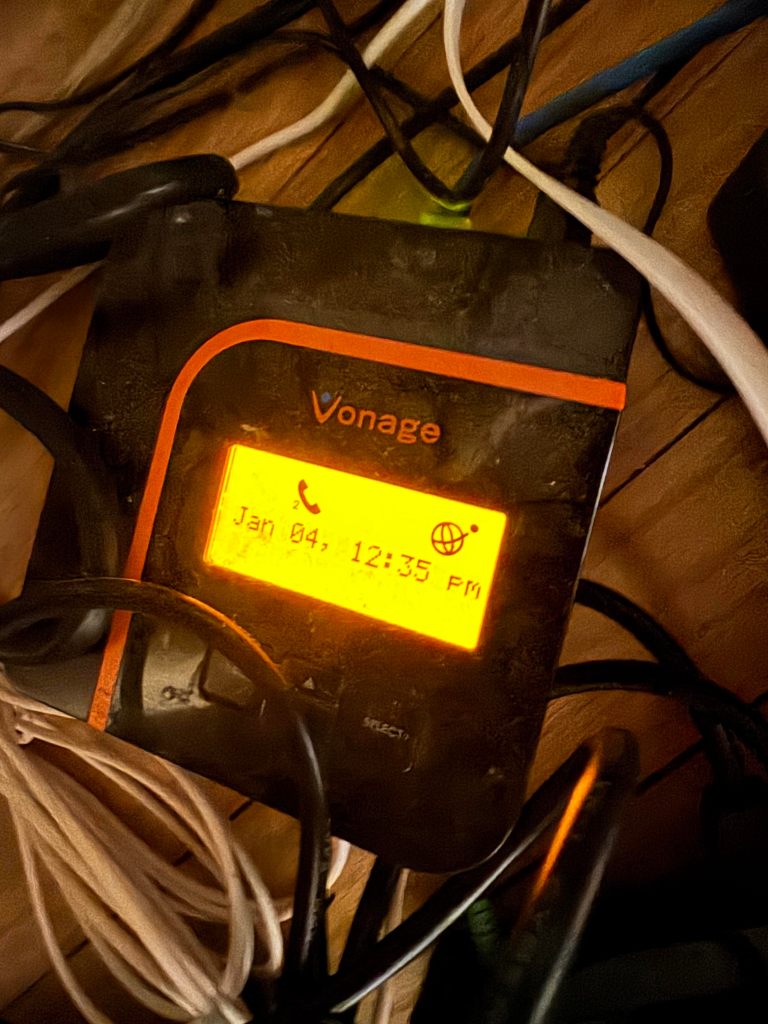
Years later, I worked for Vonage, the company that brought internet telephony to consumers. We first launched local area codes in NYC and Edison, New Jersey. One of my roles was to write the press releases when we launched in new locales. I wanted to interest the local writers. Sadly, in today’s world, many of those great folks are gone.
Vonage Device
Having watched some companies launch locally by saying, “We are now in Dallas, New Orleans, or San Diego…” I tailored the copy to make it sound like we were part of those cities. As soon as the releases crossed Business Wire and I personally emailed them to local reporters, we got coverage. Even better, retailers called and asked if they could sell our products in their stores. Civilians called to ask whether we were opening a store in their neighborhood and where to send their resumes. The service was sold online, for the most part. But we did sell the devices that connected to the service in local and chain electronics stores. So, we did our local thing, which may have helped local stores increase their revenue and the number of people in the workforce.
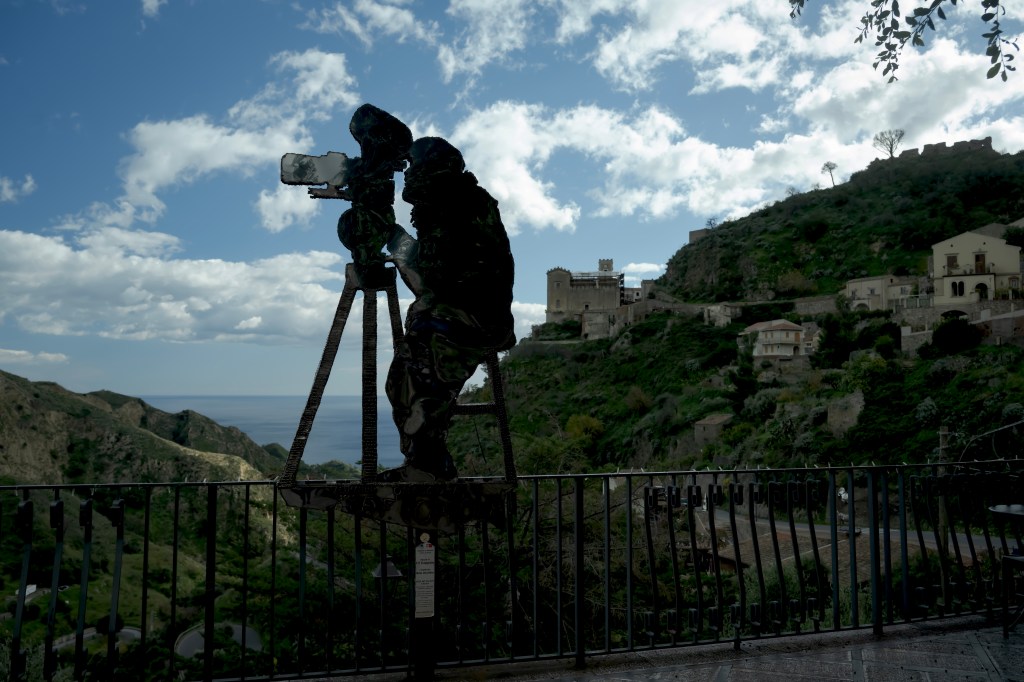
Jumping to marketing tactics in Sicily. I recently returned from Sicily. I highly recommend it. The sites, people, food, and drink are incredible. During my tour, I was fortunate enough to visit Savoca, where Francis Ford Coppola filmed several scenes from “The Godfather.”
While walking to the church where Michael Corleone and Appolonia wed, I saw a great local marketing tactic put into play by my local guide, a wonderful woman of British and Sicilian ancestry. She joined us for three days. Her intimate local knowledge was incredible. But her skills in helping people in small towns stood above it all.
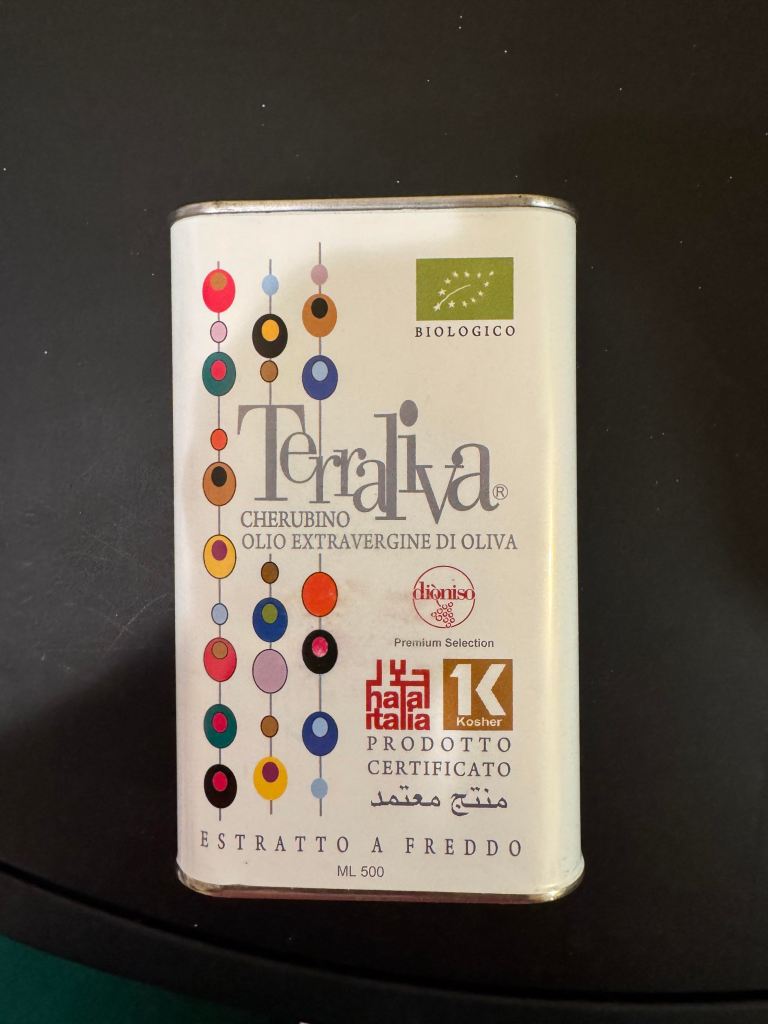
As we walked to the church where Michael Corleone and Appolonia wed, we passed Dioniso, a great little store selling olive oils, spices, wines, and other great stuff. The store was not supposed to be open when we were touring Savoca. Our guide texted the owner and let him know she was bringing a crew of 45 people through town, and he might want to open. As we approached the store, we saw him opening the shop. She introduced us, and we did tastings and bought numerous items. He probably stayed open for just about an hour. He made many sales. Again, local marketing. Tell them we are coming and let them open; they will succeed.
Olive Oil from Dioniso
I remember so many calls from national reporters, particularly from the Associated Press or The Wall Street Journal, calling or emailing about things they read in the local news about the companies I worked for. I have seen this with social media. I run several sites for local organizations. We get thousands of visitors. Viewers of our work have increased donations of memorabilia and money, as well as visits to our location. Bottom line: start local and remember it will lead to growth.
 Mitchell's thoughts, photos, etc.