In today’s world, we have so many tools to communicate with each other. Does it make life easier? Yes. Does it make life tougher? Yes. Let’s sit back and think for a minute. We now communicate in person, by phone, text, chat, social media, and other ways. It’s not unusual to be sitting at your desk, whether it is in your kitchen or an office somewhere in the city, focusing on your assignment, as emails fly across your screen, your phone buzzes with countless texts, and people are contacting you on Facebook’s and LinkedIn’s messaging services. Does it make it easier? It can. Does it make it rougher? It can.
Many people get jittery as they enter the final stages of a project. As you’re launching it on your website, social media feeds, and to the media, you want it to be perfect. Once it’s been decided that the documents, graphics, etc., are final, the push begins. As you’re uploading to your project management software to start the distribution process, it’s often when it can get chaotic.
I like to remain focused, sit at my laptop, plug away, and be zoned in only on the project at hand. Too many times, it’s at that time when everyone decides to weigh in once again. My Outlook account is full of emails. Thanks to today’s technology, you can see them jumping out at you. My phone goes crazy with countless texts. Then there are the people who decide to message you on LinkedIn or Facebook. Or use Slack or Snap. Does this help you? Yes and No. But in many cases, that’s what creates confusion and leads to mistakes. I have been telling people at the final stages of the project, let’s use one stage of communication. I prefer email. I make sure to tell people to remember to hit reply all. Most of the time, this works. It keeps people focused.
No, I am not talking about Aretha Franklin’s tune. Years ago, I worked for someone who, when it came to politeness and respect for others, had it down to a science. I remember in elevators, he would always wait for everyone to exit, especially the women. He held the doors for everyone and helped people with their coats and into their chairs.
I haven’t heard from him in a few years. But I doubt things have changed. His dad, who is long gone, was similar. There was a great scout leader who passed away a few years ago; he was an example of respect, particularly toward our campgrounds. We’d walk around the camps, and whenever he saw garbage, he’d pick it up off the trails. He’d be upset it was there. He taught us to keep our sites clean, and when we saw trash, we cleaned it up and disposed of it properly.
I try to follow their steps. But I have found that in today’s world, simple respect is gone. A few weeks ago, I was entering the gym. It was pouring outside. I saw a person dragging their heavy gym bag at the door and trying to exit. I held the door for her. She stood there for the next several minutes texting away. This has happened a few times—the same thing in elevators and at the doors of our office buildings.
Cell phone addiction has cramped respect. People are too interested in seeing their friends’ latest memes or social media posts. But I think it was happening slightly before people’s best friends became their iPhones. The trails of the places I hike are getting dirtier, and less people are wiping down machines in the gym after they finish using them. The list goes on.
More respect equals better productivity. People will likely be more motivated and happier.
Email has been mainstream in business since the 1990s. As we know, we now have too many other ways to communicate, including but not limited to social media and texting. Remember faxing? Or snail mail? Both are still in play.
As a chair of a community organization and a volunteer in a few others, we generally communicate our business via email. Several of us who are friends often have our own discussions via chat. But all official business is done via email.
We have members who do not have email. They do not have computers. Some are senior citizens. But before we toss in the age factor, I have worked with people in their early 90s to create PowerPoints and run podcasts. They had no issues. Yes, I worked with people much younger who had no clue how to use email or other communication methods. So, age is just a number.
About two weeks ago, it snowed in New York City. It hampered some events. One started at 7:30 a.m. ET. The other was supposed to begin at 9 a.m. ET. We wound up combining our groups. This recent storm was not the first time we have had to take that course of action. It will not be the last. We early birds sat around, and the folks from the later-starting group wandered in. Both groups have their latecomers. Snow delayed some of them even further. A day or two later, I suggested that when we know the weather will not be good, we send an email and make a robocall to let people know we are combining. Several people blasted this idea, saying some people don’t have email, and others don’t want to be bothered by a robocall. I made the case that email has been in play for a long time and that the call was coming from a number we all know. It should not register as a potential spam call, as carriers like to say.
I know people who text to landlines. I still have one. The texts usually arrive in gibberish. As chair of my group, generally start meetings (which are traditionally on Zoom, that’s another issue), reminding people you need to text their cell phones. Some folks love Facebook Messenger. Unfortunately, they do not realize Messenger works on Facebook. Many don’t know that you cannot email Gmail or send SMS messages from Messenger. Don’t get me started on WhatsApp. I think it works great and has its place.
Before I was chair, I was corresponding secretary. I created a form for people to send me via email when they donate. I can take their contact information off it and generate thank-you notes to distribute via email and traditional mail. It is still lovely to receive a personal, warm thank-you note in the mail. One of my chairs used to mail me handwritten notes with donor information. Sometimes he would wait weeks, and I’d get an envelope with 30 or 40 scraps of paper with contact information. This issue severely hampered our program.
The question has always lingered in my mind: What to do? I continue to use email and will call people. But the question will always linger on how to reach everyone.
Some of us remember the phrase, “All politics is local,” used by former House Speaker Tip O’Neill throughout his career. His dad reminded him of that in the ‘30s, after he lost his first election while running for a seat on the Cambridge City Council. He took his own neighborhood for granted. It has been said to be a great learning experience for him. For me, too.
Let’s jump out of politics and go to PR. Trust me, as a long-time practitioner who started in NYC’s government, the profession has its politics. The key thing to remember is that all good PR is local. It is the best way to build. We will jump from Staten Island, New York, to Edison, New Jersey, other parts of the USA, and end in Sicily, Italy.
Fresh out of college and while in grad school, I started volunteering on local and city-wide political campaigns in NYC. I landed my first job as a staff member in NYC, moved on to the mayor’s office, and then went into the private sector. I watched each candidate and elected official fight it out and reach an agreement on local issues. It could have been infrastructure, for example, which district would get money for new sanitary and storm sewers or better bus routes.
After leaving politics and joining a tech PR firm, I represented the former Consumer Electronics Manufacturing Association (CEMA), now the Consumer Electronics Association (CEA). I was involved with this great organization for many years, both representing them and sponsoring their press room.
Composed of leading electronics makers, such as Bose, Panasonic, and Sony, which, along with others, made great audio equipment for cars. There was a time before you used SiriusXM or your iPhone to get your music in your vehicle. You pumped up your Caddy, Jeep, Nissan, Ram, Vette, Toyota, etc., with great speakers and cassette players. Then we moved onto CD players and theater systems in the cars. The car audio market was huge.
We sent local car audio experts across the country to explain why you should upgrade your vehicle with their equipment rather than rely on the dealer models. Our spokespersons traveled to top and secondary cities and did local newspaper, radio, and TV interviews. They popped into the local auto shows.
I remember when we had high-end cars with great sound systems and a spokesperson lined up outside of CBS’s studio in NYC. The story went national.
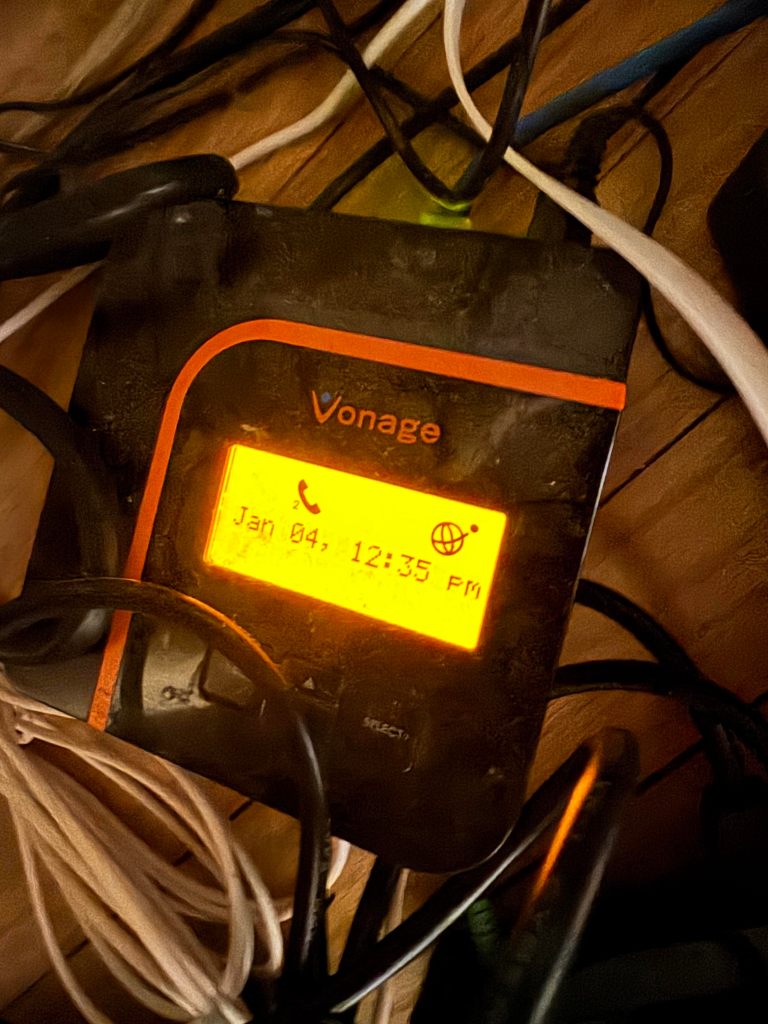
Years later, I worked for Vonage, the company that brought internet telephony to consumers. We first launched local area codes in NYC and Edison, New Jersey. One of my roles was to write the press releases when we launched in new locales. I wanted to interest the local writers. Sadly, in today’s world, many of those great folks are gone.
Vonage Device
Having watched some companies launch locally by saying, “We are now in Dallas, New Orleans, or San Diego…” I tailored the copy to make it sound like we were part of those cities. As soon as the releases crossed Business Wire and I personally emailed them to local reporters, we got coverage. Even better, retailers called and asked if they could sell our products in their stores. Civilians called to ask whether we were opening a store in their neighborhood and where to send their resumes. The service was sold online, for the most part. But we did sell the devices that connected to the service in local and chain electronics stores. So, we did our local thing, which may have helped local stores increase their revenue and the number of people in the workforce.
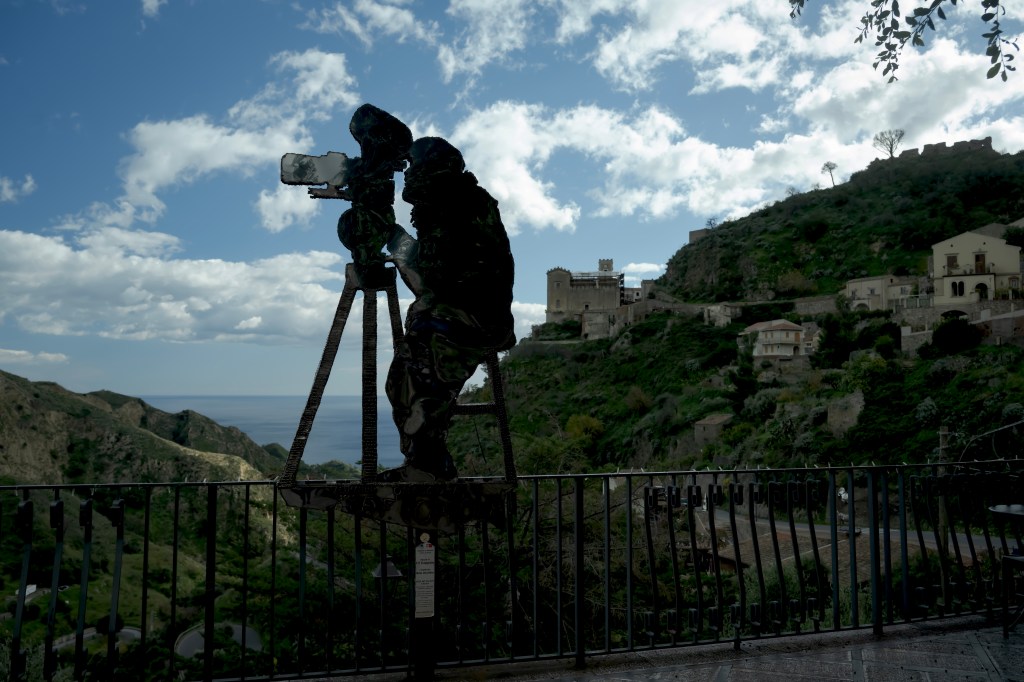
Jumping to marketing tactics in Sicily. I recently returned from Sicily. I highly recommend it. The sites, people, food, and drink are incredible. During my tour, I was fortunate enough to visit Savoca, where Francis Ford Coppola filmed several scenes from “The Godfather.”
While walking to the church where Michael Corleone and Appolonia wed, I saw a great local marketing tactic put into play by my local guide, a wonderful woman of British and Sicilian ancestry. She joined us for three days. Her intimate local knowledge was incredible. But her skills in helping people in small towns stood above it all.
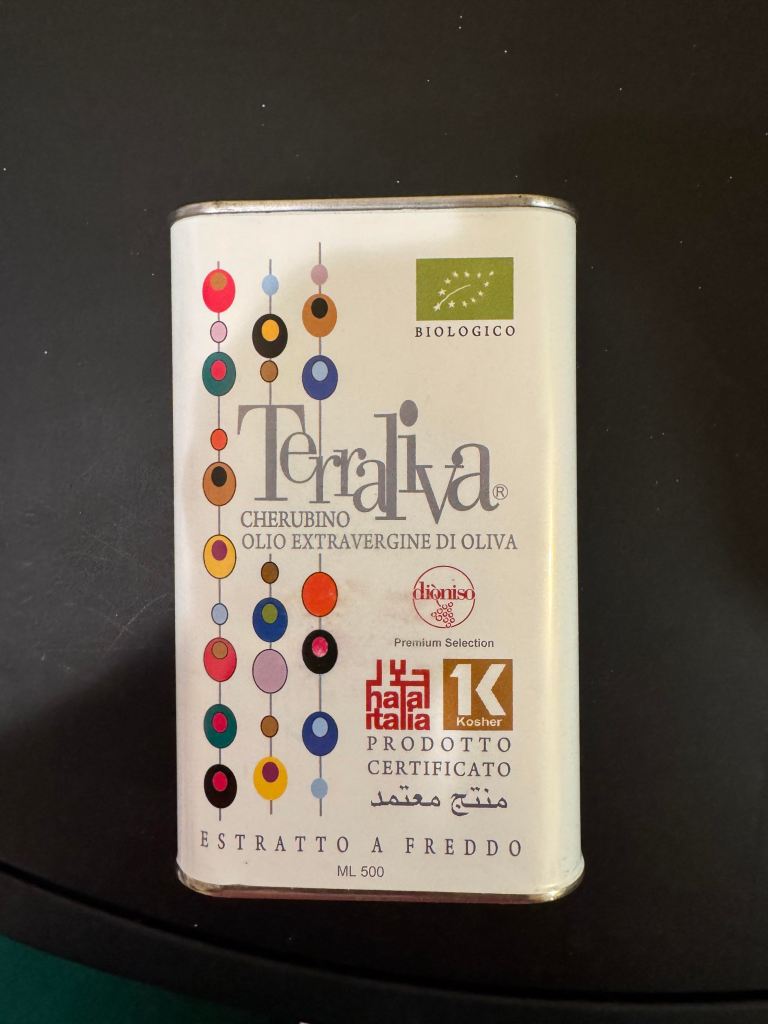
As we walked to the church where Michael Corleone and Appolonia wed, we passed Dioniso, a great little store selling olive oils, spices, wines, and other great stuff. The store was not supposed to be open when we were touring Savoca. Our guide texted the owner and let him know she was bringing a crew of 45 people through town, and he might want to open. As we approached the store, we saw him opening the shop. She introduced us, and we did tastings and bought numerous items. He probably stayed open for just about an hour. He made many sales. Again, local marketing. Tell them we are coming and let them open; they will succeed.
Olive Oil from Dioniso
I remember so many calls from national reporters, particularly from the Associated Press or The Wall Street Journal, calling or emailing about things they read in the local news about the companies I worked for. I have seen this with social media. I run several sites for local organizations. We get thousands of visitors. Viewers of our work have increased donations of memorabilia and money, as well as visits to our location. Bottom line: start local and remember it will lead to growth.
 Mitchell's thoughts, photos, etc.